
01
Teach
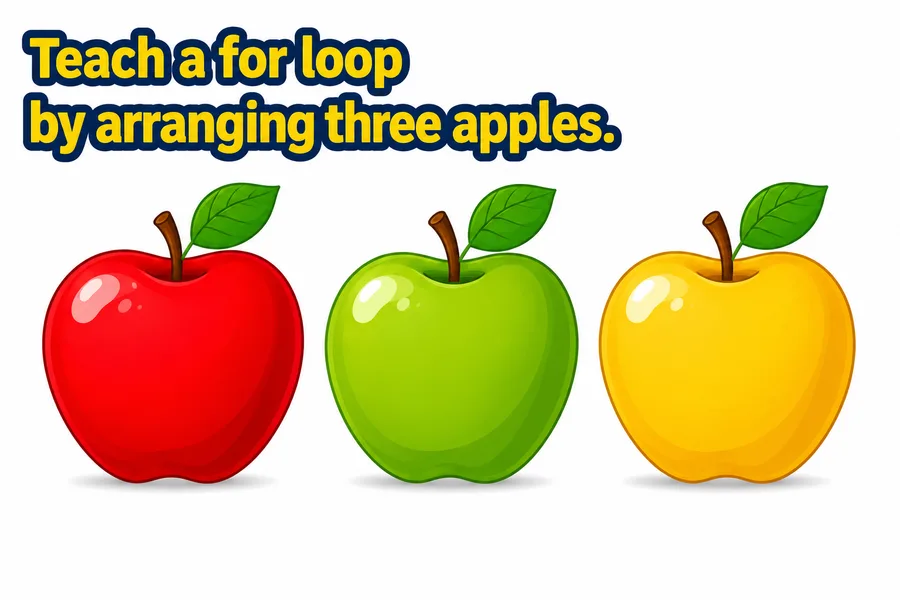
I introduce the concept with a real-life example inside a mini project.
My story
But I didn't start out as a teacher. I started out exactly where a lot of you are right now: confused, overwhelmed, and quietly wondering if coding was just too hard for me.
Back in 2021, when I began with HTML and CSS, my routine looked like this. I'd watch a YouTube video about how to learn coding, the right order of topics, the "essential" concepts, or the perfect roadmap. That video would point me to a tutorial. I'd open the tutorial, copy whatever the creator did on screen line by line, see the output, and move on to the next concept.
When the creator taught Flexbox or how to center an element, I'd simply mimic the steps and move on. I never stopped to realize that Flexbox and centering are just tools you reach for when you're building a real page. To me, they were isolated steps to copy, nothing more.
Then I'd jump to Bootstrap. Another creator would say Tailwind was better, so I'd switch to Tailwind. After finishing every "essential" concept the videos told me to learn, I still felt like I had learned nothing. I didn't know what to learn next, how to learn it, or why nothing was clicking despite all the hours I'd put in.
So I did what many people do. I bought a 70-hour Udemy course and finished about half of it.
Then I moved to JavaScript, and that's where it really fell apart.
Most courses teach JavaScript the same way. First variables, then data types, then arrays, then objects, then a few DOM concepts, then a quick ToDo app, then another flood of concepts, and finally another small project. It's mostly syntax. They show you what to type, but they rarely build the mental models that make you think, "Aha, now I get it." They assume you already know things. They don't explain every line, and they often skip the what, the how, and the why behind a concept.
That gap is exactly what I built my teaching around.
A concept is only truly learned when it gives you that "aha" moment. The kind where you think, "I understand this now, and with what I just learned I can go build something on my own and even come up with my own examples and use cases."
That feeling comes from building a mental model, not from memorizing syntax.
And mental models are built by building projects.
That's why I don't teach concepts in isolation. We pick a project to build, and the project naturally tells us which concepts we need. Then we learn those concepts one by one, making sure we understand the what, the how, and the why before moving on.
Take a for loop, for example. First we look at what a for loop actually is. Then we understand how it works. Finally, we learn why we'd reach for it inside a real project. Once those three pieces click together, the concept sticks.
01
I introduce the concept with a real-life example inside a mini project.
02
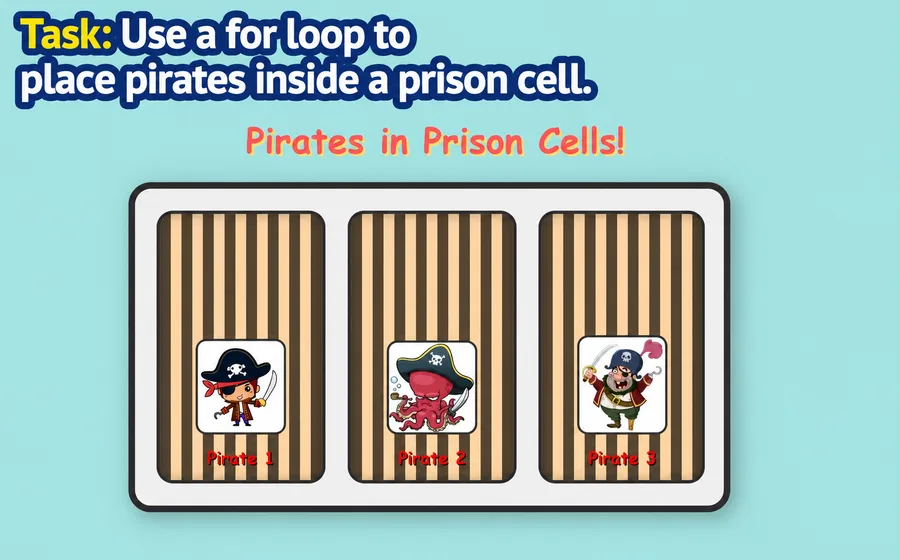
I give you a task so you can implement what you just learned on your own.
03
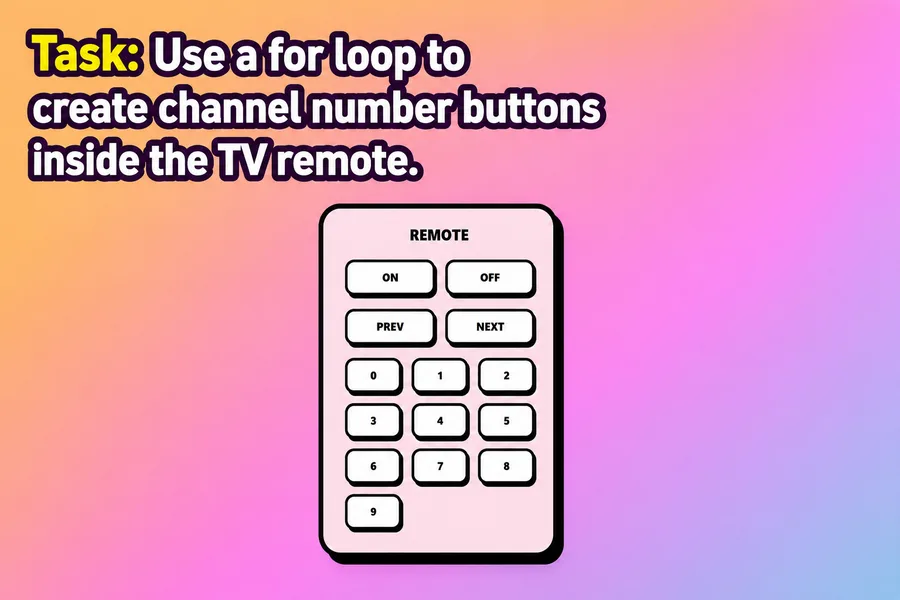
Then we put it to work inside the main project we're building together.
Maybe you've read all this and still don't fully get what I mean by mental models, or by the what, how, and why behind a concept.
If that's you, no worries.
Right below is a visual explanation that lays it out clearly. When you're ready, head to the lessons in the left sidebar to see my teaching method in action. Those lessons are a demo of my teaching style and a taste of how you'll learn by building fun projects instead of just watching tutorials.
Three years ago, I became a coding trainer at a skill development institute. I knew right away that I couldn't just repeat what was already on YouTube or Udemy because many of my students had already watched those videos and were still struggling.
The pay was good, but what pushed me even harder was the thought of standing in front of a class and watching students leave more confused than when they walked in.
So I made a decision. Instead of taking shortcuts, I would understand every concept deeply. I'd spend day and night learning, questioning, and building my own examples until I could explain even difficult ideas in the simplest possible way.
Somewhere along the way, I fell in love with teaching.
I'd wake up every morning excited to get to class because I couldn't wait to show students the fun projects I had prepared. Building lessons put me into a quiet state where I'd lose all track of time. And when a student's face lit up with "Whoa, I finally get it," it made every late night worth it.
When you teach, you learn.
Some of my favorite moments came from the questions I couldn't answer.
A student would ask something unexpected and I'd think, "Whoa, I never thought about that." Instead of bluffing my way through it, I'd be honest. I'd say, "I don't know yet. Give me some time and I'll find out."
Then I'd go home, dig into the topic until I was confident I understood it, and come back with the answer for the entire class. That process taught me the edge cases and common pitfalls that most tutorials never mention.
My goal isn't to fill your head with syntax. It's to help you understand coding well enough to solve problems and create projects on your own.
Instructor